
Everything You Need to Know About Tooth Decay and Treatment Options
Everything You Need to Know About Tooth Decay and Treatment Options
Tooth decay is one of the most common dental problems faced by people of all ages. It can start small — a little sensitivity or a tiny spot on your tooth — but if left untreated, it can lead to cavities, infections, pain, and even tooth loss. Fortunately, modern dentistry offers a range of effective solutions for tooth decay treatment that are safe, fast, and often pain-free.
In this comprehensive guide, we’ll break down everything you need to know about tooth decay: how it starts, what causes it, how to spot it early, and the best treatment options available today.
What Is Tooth Decay?
Tooth decay, also known as dental caries or cavities, is the destruction of the tooth’s enamel — the hard, outer layer that protects your teeth. It happens when food particles, especially sugars and starches, are left on the teeth. Bacteria feed on these sugars, producing acids that attack the enamel.
Over time, this can lead to:
- Holes in the teeth (cavities)
- Sensitivity to hot, cold, or sweet foods
- Pain or toothache
- Infection or abscess if the decay reaches the tooth pulp
What Causes Tooth Decay?
There’s no single cause of tooth decay. It usually results from a combination of factors:
Poor oral hygiene – Not brushing and flossing regularly allows plaque to build up.
Sugary and acidic foods – These feed the bacteria in your mouth.
Dry mouth – Less saliva means fewer natural defenses against decay.
Frequent snacking – Especially on sticky or sugary foods.
Lack of fluoride – Fluoride helps strengthen enamel and fight bacteria.
Understanding these causes can help you take steps to prevent the problem before it starts.
Early Signs of Tooth Decay
Recognizing tooth decay in its early stages can make treatment simpler and more affordable. Look out for:
- White or brown spots on the teeth
- Sensitivity to cold, hot, or sweet foods
- Bad breath that doesn’t go away
- A visible hole or dark spot in the tooth
- Tooth pain when chewing
If you notice any of these symptoms, consult your dentist for a professional evaluation and timely tooth decay treatment.
How Is Tooth Decay Diagnosed?
Dentists use several tools to diagnose decay:
- Visual examination using dental mirrors
- Probing the tooth surface for soft spots
- X-rays to detect decay under the enamel or between teeth
Early diagnosis is key. The sooner decay is caught, the less invasive the tooth decay treatment will be.
Tooth Decay Treatment Options
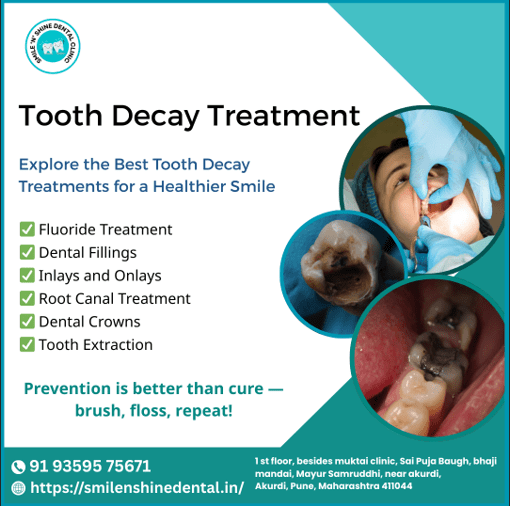
Depending on the stage and severity of the decay, dentists offer various tooth decay treatments. Let’s explore the most common ones:
- Fluoride Treatment (For Early Decay)
If your decay is caught early — before a cavity forms — a fluoride treatment may be all you need. Fluoride helps remineralize enamel and reverse the early signs of decay.
Available as:
- In-office fluoride gels or varnishes
- Prescription toothpaste or mouth rinse
For small to medium cavities, the most common tooth decay treatment is a filling. Your dentist will remove the decayed portion of the tooth and fill it with a durable material such as:
- Composite resin (tooth-colored)
- Silver amalgam
- Gold or ceramic
Fillings restore the tooth’s shape and function and prevent further decay.
- Inlays and Onlays
If the cavity is too large for a filling but not severe enough for a crown, your dentist might recommend an inlay or onlay. These custom restorations are made in a dental lab and bonded to the tooth.
- Root Canal Treatment
If the decay has reached the pulp (the inner part of the tooth with nerves and blood vessels), a root canal becomes necessary. This procedure involves:
- Removing the infected pulp
- Cleaning and disinfecting the canals
- Filling and sealing the tooth
Root canals save severely damaged teeth and relieve pain without needing extraction.
- Dental Crowns
If a tooth is severely decayed or weakened, your dentist may place a crown (a tooth-shaped cap) over it. Crowns protect the remaining structure and restore full function.
They are often used after a root canal or in cases of widespread decay.
- Tooth Extraction
In cases where the tooth cannot be saved due to extensive decay, extraction may be necessary. Once removed, the missing tooth can be replaced with:
- Dental implants
- Bridges
- Partial dentures
Tooth Decay Treatment for Children
Children are especially prone to tooth decay due to sugary diets and inconsistent brushing habits. Pediatric dentists often use:
- Fluoride varnishes
- Dental sealants (protective coatings on back teeth)
- Painless composite fillings
Educating kids about proper oral care and scheduling regular dental check-ups can reduce their risk of cavities.
How to Prevent Tooth Decay
Prevention is always better than cure. Here are some simple yet powerful steps to avoid the need for tooth decay treatment:
Brush twice a day with fluoride toothpaste
Floss daily to remove plaque between teeth
Limit sugary and acidic foods and drinks
Stay hydrated to support saliva production
Visit your dentist every 6 months for cleanings and exams
Use dental sealants if recommended for your back teeth
Chew sugar-free gum to help clean teeth between meals
Practicing good oral hygiene habits consistently is the best way to protect your smile long-term.
Latest Advances in Tooth Decay Treatment
Dentistry has evolved rapidly, and newer technologies make tooth decay treatment more comfortable and efficient than ever:
- Laser dentistry: Minimally invasive cavity removal with less pain
- Air abrasion: Drill-free method for treating small cavities
- Biomimetic materials: Fillings that closely mimic natural tooth structure
- Smart toothpastes: Formulated with nano-hydroxyapatite for enamel repair
Many clinics now offer pain-free treatment options, making dental visits far less intimidating.
When to See a Dentist
Don’t wait for the pain to worsen. You should see a dentist if:
- You feel sensitivity or pain in a tooth
- You notice discoloration or spots
- You experience bad breath or bleeding gums
- It’s been more than 6 months since your last dental visit
Prompt action leads to easier and more affordable tooth decay treatment — and prevents future complications.
Final Thoughts
Tooth decay is a common issue — but it’s not one you have to live with. From early detection to advanced tooth decay treatment options, modern dentistry provides everything you need to protect your smile.
The key is acting early. Whether you’re dealing with a mild cavity or a more serious case, maintain great oral hygiene, and never ignore the warning signs.
Your smile deserves care — and now, treating tooth decay is easier and more comfortable than ever.