
Tooth Extraction Made Easy: How Modern Dentistry Minimizes Pain
Tooth Extraction Made Easy: How Modern Dentistry Minimizes Pain
Tooth extraction has long carried a reputation for being painful, uncomfortable, and even scary. But times have changed. With the advancement of dental tools, anesthetics, and techniques, painless tooth extraction is not just a possibility—it’s the new norm in dental care. Modern dentistry has transformed what used to be an intimidating experience into a quick, gentle, and highly manageable procedure.
Whether you’re facing an extraction due to decay, crowding, or infection, it’s comforting to know that today’s methods prioritize your comfort, safety, and peace of mind. In this blog, we’ll explore how modern dentistry minimizes pain, what to expect during the procedure, and how to tell if extraction is truly necessary for your dental health.
What Is Tooth Extraction?
Tooth extraction is the process of removing a tooth from its socket in the jawbone. It may be recommended when a tooth is severely damaged, infected, or causing complications like crowding or impaction. While the idea of losing a tooth can be unsettling, extraction is often the best course of action to preserve overall oral health and prevent further issues.
Why Teeth Sometimes Need to Be Removed
Tooth extraction isn’t always the first option. Dentists usually attempt to save natural teeth whenever possible through fillings, root canals, or crowns. However, in some cases, extraction becomes unavoidable. Here are some common reasons why:
- Severe decay that reaches the pulp and cannot be treated with a root canal
- Broken or fractured teeth below the gum line
- Infection that spreads beyond the tooth
- Overcrowding, especially when preparing for orthodontic treatment
- Impacted wisdom teeth that cause pain, swelling, or infection
- Advanced gum disease leading to tooth loosening
While extractions may sound drastic, modern techniques ensure that the process is as gentle and safe as possible.
How Modern Dentistry Makes Extractions Painless
Gone are the days of painful pulling and long recovery times. Today, painless tooth extraction is achieved using a combination of modern technology, skilled technique, and customized patient care. Here’s how dental professionals ensure a smooth experience:
- Digital Imaging for Precision
Before performing any extraction, dentists use digital X-rays or 3D scans to get a clear view of the tooth’s position, root structure, and surrounding bone. This allows for a detailed, accurate treatment plan that reduces complications and supports faster healing.
- Effective Local Anesthesia
One of the most crucial aspects of a painless tooth extraction is the use of high-quality local anesthesia. The numbing agent is injected around the tooth to block pain signals, so you won’t feel pain—only pressure. The process takes only a few minutes to take effect.
- Sedation Options for Anxiety Relief
Many people experience anxiety around dental procedures. To address this, dentists offer sedation options such as nitrous oxide (laughing gas), oral sedatives, or IV sedation. These techniques help patients remain calm and comfortable throughout the procedure.
- Gentle Techniques and Specialized Tools
Modern dentists are trained to perform extractions using minimally invasive techniques. They use precision tools to loosen the tooth gently, reducing trauma to surrounding tissues. If necessary, the tooth can be sectioned into smaller pieces for easier removal. This method greatly reduces pain and speeds up recovery.
- Laser-Assisted and Ultrasonic Extractions
Some dental practices now use lasers or piezoelectric ultrasonic devices to assist in the extraction process. These tools allow for ultra-precise removal of the tooth while preserving as much healthy bone and tissue as possible, leading to less post-operative discomfort.
What Happens During a Painless Tooth Extraction?
Knowing what to expect can ease much of the anxiety surrounding the procedure. Here’s a step-by-step breakdown of a typical painless tooth extraction:
Step 1: Pre-Procedure Assessment
Your dentist conducts a full oral examination and reviews X-rays to plan the best approach for removing the tooth.
Step 2: Anesthesia and Sedation
The area around the tooth is numbed, and sedation is administered if needed. Most patients report feeling relaxed and calm at this stage.
Step 3: Tooth Removal
The dentist gently loosens the tooth using specialized instruments. Once loose, the tooth is carefully lifted out of the socket. If necessary, small incisions are made to remove stubborn or impacted teeth.
Step 4: Post-Extraction Care
A gauze pad is placed over the extraction site to help control bleeding. The dentist will provide detailed aftercare instructions to encourage smooth and rapid healing.
Key Signs You May Need a Tooth Extracted
Tooth extraction isn’t always an emergency—it’s often the result of warning signs that have been developing over time. Recognizing these signs can help you seek treatment early and avoid further issues.
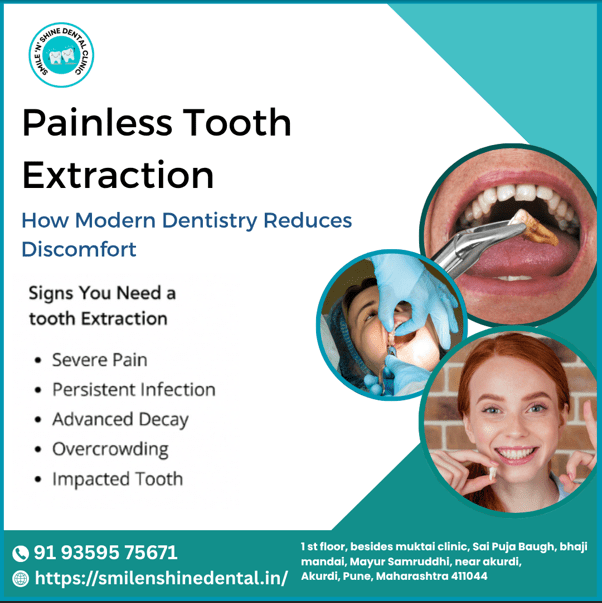
Some of the signs you need a tooth extraction include:
- Persistent tooth pain that doesn’t go away with medication
- Swelling or pus around a tooth, indicating infection
- A tooth that has become loose or feels unstable
- A broken tooth that cannot be restored with a crown
- Crowding or lack of space before orthodontic treatment
- Wisdom teeth that are causing pain or misalignment
If you’re experiencing any of these symptoms, it’s essential to consult your dentist. They can assess whether the tooth can be saved or if removal is the best option.
Aftercare Tips for a Quick Recovery
Although the procedure itself is virtually painless, post-extraction care is vital for proper healing. Follow these tips to ensure a smooth recovery:
- Rest for the first 24 hours and avoid strenuous activity
- Apply ice packs to reduce swelling
- Avoid using straws, smoking, or spitting forcefully, which can lead to dry socket
- Eat soft foods like soup, yogurt, and mashed potatoes
- Take medications as prescribed by your dentist
- Keep your head elevated while sleeping
- Gently rinse with salt water after 24 hours to keep the area clean
With proper care, most patients recover quickly and can return to normal activities within a few days.
When Should You Replace an Extracted Tooth?
For some teeth—especially molars or front teeth—your dentist may recommend a replacement to maintain chewing function and alignment. Options include:
- Dental Implants: The most natural and long-lasting solution
- Bridges: A fixed replacement using surrounding teeth for support
- Partial Dentures: A removable option for multiple missing teeth
Talk to your dentist about which solution is right for your needs.
Don’t Let Fear Hold You Back
Fear of the dentist is a common reason people delay treatment, but modern dentistry has come a long way. Compassionate care, improved techniques, and better tools have made painless tooth extraction a standard part of practice.
If you’ve been experiencing discomfort or suspect you may need an extraction, don’t wait until the pain becomes unbearable. Early diagnosis and intervention can prevent complications and help you maintain a healthier mouth.
Remember: just because a tooth is causing problems now doesn’t mean your future smile has to suffer. With today’s advanced care, you can say goodbye to pain and hello to relief—without fear.
Final Thoughts
Tooth extraction doesn’t have to be a stressful experience. Thanks to the remarkable progress in dental care, painless tooth extraction is now a routine, manageable, and highly effective procedure. When performed with modern techniques, it can relieve pain, stop infections, and lay the foundation for long-term oral health.
If you’re noticing persistent pain, swelling, or other warning signs, don’t ignore them. These may be early signs you need a tooth extraction. The best step you can take is to consult SmileNshine Dental clinic, a trusted dental clinic for a thorough evaluation. An experienced dentist will help you understand your options, explain the process in detail, and make sure you feel comfortable every step of the way.
Your smile—and your health—deserve expert care. Book your consultation today and take the first step toward a pain-free, healthier mouth.