
Zirconia Crowns Procedure Explained | Safe & Stunning Result
When it comes to restoring damaged or decayed teeth, modern dentistry offers a variety of crown materials—but one option is quickly becoming a favourite for both patients and dentists alike: Zirconia dental crowns. These crowns are not only durable but also highly aesthetic, making them an ideal choice for those who want strength without sacrificing appearance.
In this blog, we’ll walk you through the zirconia crowns procedure, its benefits, and why it could be the best choice for your dental restoration.
What Is Zirconia Dental Crowns?
Zirconia dental crowns are made from zirconium dioxide, a strong, biocompatible ceramic that offers impressive resistance to wear and fracture. Unlike traditional crowns made from metal or porcelain-fused-to-metal, zirconia crowns are metal-free, which means they offer excellent aesthetics and are less likely to cause allergic reactions.
They are known for:
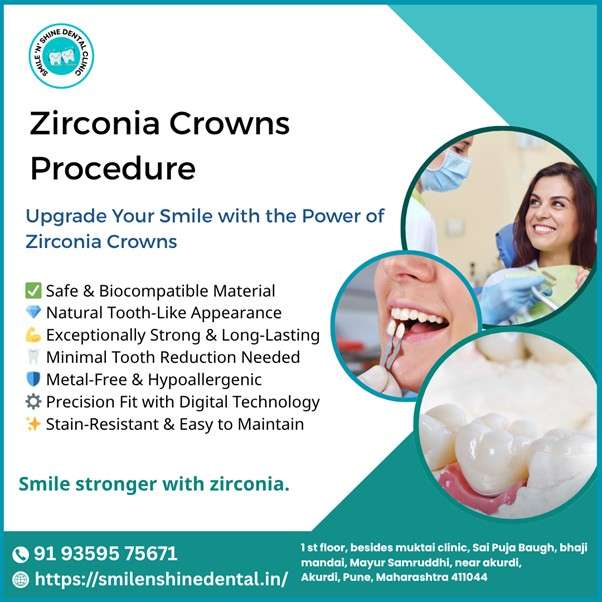
- Exceptional strength and longevity
- Natural tooth-like translucency
- Compatibility with digital scanning and CAD/CAM technology
- Minimal tooth reduction
- Stain resistance
Because of these advantages, zirconia crowns are used for both front and back teeth and are often recommended for patients who grind their teeth or need a long-term solution.
When Do You Need a Zirconia Crown?
The zirconia crowns procedure is typically recommended in the following situations:
- Severely decayed or damaged teeth
- Post-root canal treatment to strengthen a tooth
- Large fillings that weaken the tooth structure
- Cosmetic corrections for misshapen or discoloured teeth
- Restoration of broken or worn-down teeth
- Replacing old metal crowns
Step-by-Step Zirconia Crowns Procedure
Understanding the zirconia crowns procedure can help reduce anxiety and give you a clearer picture of what to expect. Here’s a detailed breakdown:
- Initial Consultation
Your dentist will first examine the affected tooth using digital X-rays or 3D scans to assess the extent of damage and determine if a crown is the best solution. If zirconia is suitable, you’ll discuss options for full-contour or layered zirconia based on your aesthetic and functional needs.
- Tooth Preparation
Once a treatment plan is in place, the tooth is reshaped to make room for the crown. This typically involves removing a small amount of enamel. Because zirconia crowns are strong even in thinner layers, less tooth structure is removed compared to traditional crowns.
If necessary, a buildup or core filling is done to strengthen the base.
- Digital Impressions
Next comes a digital scan of your teeth using an intraoral scanner. This replaces traditional messy Molds and ensures high precision. The scan is sent to a dental lab, where your zirconia dental crown is custom designed using CAD (Computer-Aided Design) software.
- Temporary Crown Placement
While your permanent zirconia crown is being fabricated, a temporary crown is placed to protect the tooth and maintain aesthetics and function.
- Crown Fabrication
In the lab, the scanned data is used to mill a zirconia crown with high precision. Some crowns are monolithic (made entirely from one block of zirconia), while others have a layered ceramic coating to enhance translucency—ideal for front teeth.
The crown is sintered in a furnace and polished or stained to match your natural teeth.
- Fitting and Cementation
Once ready, the dentist removes the temporary crown and places the permanent zirconia dental crown. The fit, bite, and aesthetics are checked thoroughly before bonding it permanently with dental cement.
The entire zirconia crowns procedure typically takes two visits unless your clinic offers same-day crown technology (CEREC), in which case it may be done in one appointment.
Benefits of the Zirconia Crowns Procedure
Opting for zirconia dental crowns brings numerous benefits:
✅ Strength and Durability
Zirconia is one of the strongest materials used in dentistry. It withstands heavy biting forces, making it perfect for molars.
✅ Natural Appearance
Layered zirconia crowns closely mimic the translucency of natural enamel, especially useful for front teeth restorations.
✅ Biocompatibility
Zirconia is non-reactive and ideal for patients with metal allergies. It’s gentle on gum tissues and does not cause inflammation.
✅ Precision Fit
Digital impressions and CAD/CAM milling ensure a snug, customized fit with minimal adjustment.
✅ Stain Resistance
Zirconia doesn’t discolor easily, unlike some composite or resin-based materials.
✅ Longevity
With proper care, zirconia crowns can last 15–20 years or more, making them a cost-effective investment.
Aftercare Tips for Zirconia Crowns
To maximize the life of your zirconia crown:
- Brush twice daily with a soft-bristle brush
- Floss gently around the crown to avoid plaque buildup
- Avoid biting hard objects like ice or pens
- Wear a nightguard if you grind your teeth
- Visit your dentist every 6 months for checkups
Although zirconia is strong, maintaining oral hygiene and regular dental care is crucial for overall success.
Why Choose Zirconia Crowns Over Other Types?
While porcelain-fused-to-metal (PFM) crowns were the gold standard for decades, zirconia crowns are now preferred for their:
- Better aesthetics (no grey lines)
- Higher fracture resistance
- Metal-free composition
- Digital compatibility for faster workflows
They combine the best of both worlds—strength and beauty—without compromising on comfort.
Final Thoughts
The zirconia crowns procedure is a modern, patient-friendly solution for restoring damaged teeth with strength, longevity, and aesthetic appeal. Whether you’re replacing an old metal crown or covering a cracked tooth, zirconia dental crowns offer a safe and stunning result that blends beautifully with your natural smile.
If you’re considering tooth restoration, Consult SmileNShine dental clinic. Investing in the right crown today can save you from future dental problems—and give your smile the makeover it deserves.